How Often Should a Lightning Protection System Be Maintained?
How Often Should a Lightning Protection System Be Maintained?
A lightning protection system is not something that should be installed and then forgotten.
How often it needs to be inspected and maintained depends largely on the risk profile of the site, the level of lightning protection required, and the environment in which the system operates.
In this video, Mike Visser from Power Quality explains how planned maintenance should be approached and why higher risk environments require more frequent inspection and testing.
Maintenance frequency depends on risk
Lightning protection systems are designed according to different levels of protection.
Mike explains that IEC 62305 defines four levels of lightning protection, with Level I being the most stringent and Level IV being the least stringent.
A higher risk facility will generally require more frequent maintenance than a lower risk environment.
For example, a relatively inactive domestic environment may have very little physical activity around the lightning protection system.
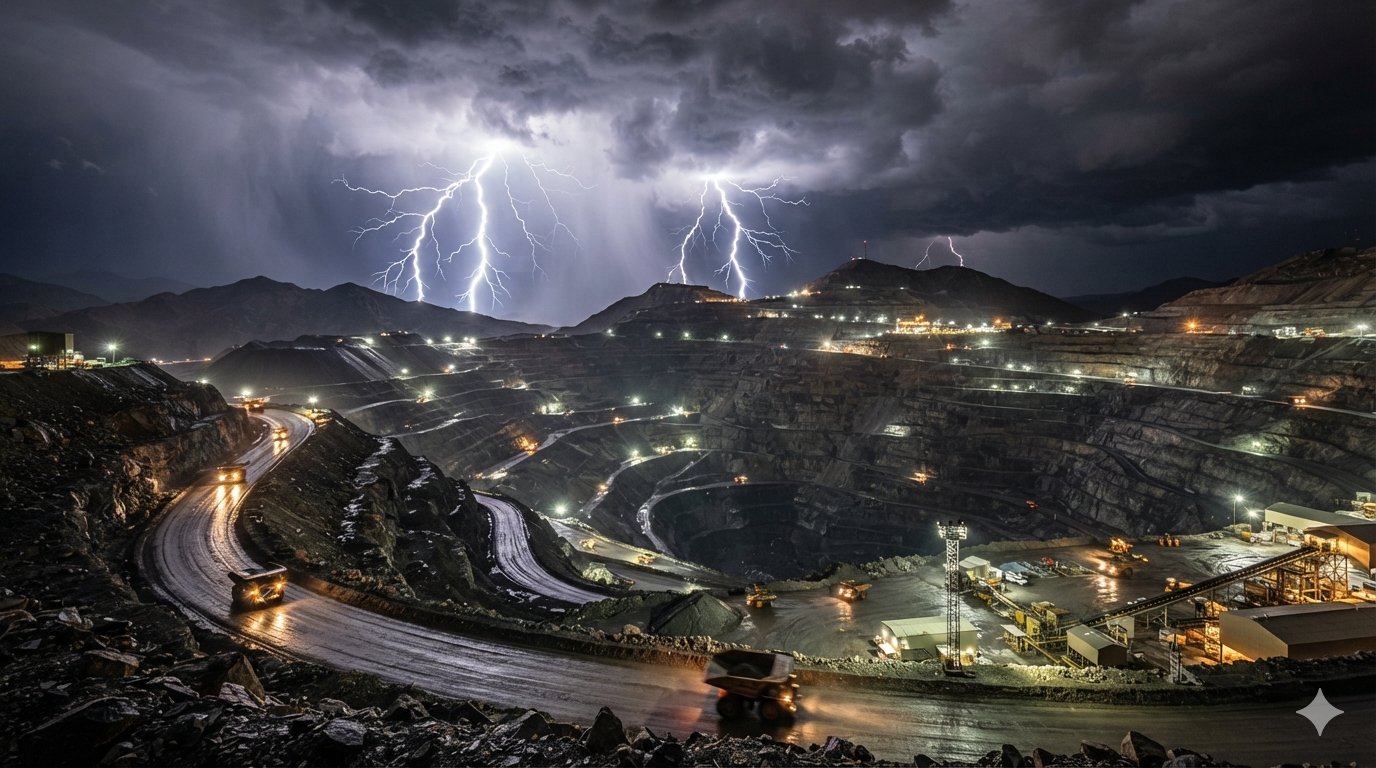
A manufacturing plant, petrochemical facility or mining environment can be very different.
Forklifts, trucks, machinery and normal site activity can physically damage conductors, bonding connections and other components of the system.
Why high risk sites need closer attention
In environments such as mining facilities and explosives magazines, even relatively minor physical damage can affect the integrity of the lightning protection system.
Mike gives the example of bonding conductors associated with rails in an explosives handling environment.
A conductor can be snagged or damaged during normal operations, which means that regular inspection becomes an important part of maintaining the protection system.
The important point is that there is no single maintenance interval that applies equally to every site.
The maintenance programme should reflect the actual risks present.
The main components that should be maintained
A lightning protection system consists of several key elements that work together.
These include:
• Air termination system
• Down conductors
• Earth termination system
• Equipotential bonding
• Surge protection
The air termination system is intended to intercept the lightning strike.
The down conductors then provide a path for the lightning current towards ground level, while the earth termination system disperses that energy into the ground.
Equipotential bonding helps reduce dangerous potential differences between conductive parts of the installation, while surge protection helps protect electrical and electronic equipment from transient overvoltages.
Surge protection should also be checked
Surge protection devices form an important part of the overall lightning protection system.
Mike recommends examining surge protection before the beginning of every lightning season.
Many surge protection devices include a simple visual status indicator.
A green indicator generally shows that the device remains operational, while a red indicator can indicate that the device has experienced a major surge and requires attention or replacement.
This is a simple check, but it can be extremely important.
A lightning protection system should not only protect the physical structure. It should also help protect the electrical and electronic equipment connected to the installation.
Equipotential bonding must be inspected and tested
Bonding conductors and their terminations should also form part of the planned maintenance programme.
The conductor itself should be inspected for damage, while the connections should be checked to confirm that they remain secure.
Vibration, mechanical movement and normal site operations can loosen or damage these connections over time.
Continuity testing can then be used to confirm that a good low resistance electrical connection still exists between bonded conductive parts and the earthing system.
How often should inspections take place?
The exact interval depends on the site.
In a lower risk environment, Mike explains that a full inspection and test may potentially be carried out every two years, with a visual inspection taking place annually.
Higher risk installations may require more frequent testing and inspection.
The maintenance interval should therefore be determined by factors such as:
• The site's risk profile
• The lightning protection level
• The type of facility
• Mechanical activity around the system
• Environmental conditions
• The consequences of a system failure
The relevant code of practice may also require visual inspections between full inspections and tests.
What happens after a known lightning strike?
This is one of the most important points in the video.
If you know that the lightning protection system has been struck by lightning, the system should undergo a complete inspection and compliance check.
That means inspecting the air termination system, down conductors, connections, fixings, earth termination system and bonding arrangements.
Resistance testing of the earth electrodes should also form part of that process.
Lightning produces extremely high currents and strong electromagnetic forces.
Conductors can move, connections can be damaged and components can even be physically destroyed during a lightning event.
A system that appears normal from ground level may therefore still require a detailed inspection.
Planned maintenance is better than reactive maintenance
The purpose of a planned lightning protection maintenance programme is to identify deterioration or damage before it results in a system failure.
For higher risk facilities in particular, this means moving away from occasional inspections and towards a structured programme of:
• Visual inspections
• Electrical testing
• Earth resistance testing
• Continuity testing
• Surge protection checks
• Bonding inspections
• Maintenance records
• Post strike inspections
The maintenance frequency should always be appropriate to the site's actual risk.
Need your lightning protection system inspected?
Power Quality provides lightning protection inspections, testing, risk assessments, earthing testing and compliance support for industrial, commercial and mining facilities.
If you are unsure how often your lightning protection system should be inspected, or whether your existing maintenance programme is appropriate for your site's risk profile, contact Power Quality.